
Inside New York City’s New Plan to Close Rikers Island Jail Permanently
In an interview with the Vera Institute of Justice, Dana Kaplan, the city’s Close Rikers Czar, explains how the Mamdani administration plans to shutter the notorious jail complex by 2032—and what comes next.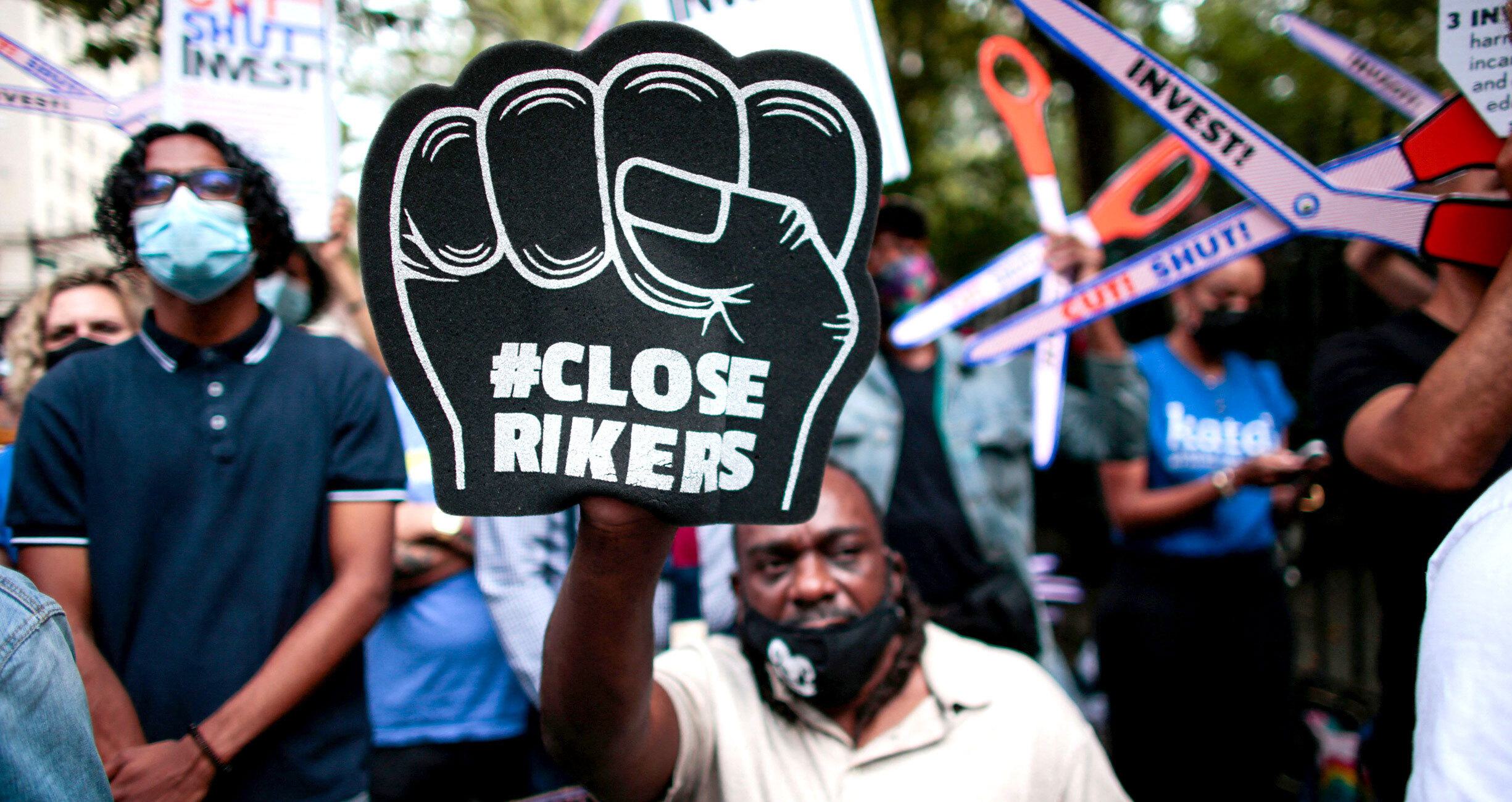
“The problems with Rikers Island are endemic,” says Dana Kaplan, New York City’s Close Rikers Czar, appointed by Mayor Zohran Mamdani in April to oversee the long-awaited closure of the notorious jail complex. Kaplan is also the primary author of the city’s new strategic plan for accomplishing that goal.
Rikers Island is “far from courts . . . far from public transportation [and] connected to the city by only one bridge, which makes it extremely challenging for people to visit their loved ones and . . . go to their court dates,” she says.
Plus, “the physical conditions of the island and the buildings themselves are an issue. It’s built on a landfill. The buildings . . . are decrepit, dangerous. They lack sufficient climate control. There’s many blind spots. That impedes safety for both people in custody and correctional staff.”
These are not new problems. “It is inconceivable that the City of New York can tolerate [this] unsightly and unsavory nuisance,” read a report to Mayor Fiorello La Guardia in 1939, just a few short years after the island became a jail. Kaplan mentions a 1979 city report recommending the closure of Rikers whose findings look remarkably similar to those of modern reports on the island’s conditions. That plan failed due to potential expense and political opposition, and it has taken decades of work to get to this moment when the total closure of Rikers Island is finally in sight.
“I think it’s really in this moment now when there is political will, both that comes out of the mayor’s office, but also driven by organizing and advocacy efforts in media and litigation from the outside, that people are saying that it is actually unacceptable to have a jail system like Rikers Island in a city that’s as world class as New York,” Kaplan says.
Why close Rikers Island?
Closing Rikers is about more than replacing aging jail facilities. It’s about closing a shameful, generations-long chapter in the city’s history and starting a new one grounded in human dignity. The city’s plan aims to create a safer, more humane system for incarcerated people, their families, and correctional staff. Given that more than 85 percent of people on Rikers are there awaiting trial, maintaining connections to community and courtrooms is key. “People languishing pretrial for years,” Kaplan says, “does nothing to service justice.”
Crucially, conditions won’t improve only for people who are incarcerated and awaiting trial. Correctional staff also stand to benefit from the system—and not just by experiencing shorter commutes to the new, conveniently located facilities.
“People who work on Rikers Island, or people who work in our city’s jails, also deserve access to more safe and humane conditions,” Kaplan says. “So the fact that there are better lines of sight and fewer beds for each housing unit support safety for people in custody and for facility staff. There’s a real focus on having more break rooms, improved locker room space. The better access to light and air and climate control are important for the people who are coming into work at facilities each and every day. And it’s a huge piece of the plan. It is essentially making a system that is more effective, safe, and fair for everyone.”
How will closing Rikers impact public safety?
The city’s plan also aims to improve public safety by addressing the factors that contribute to incarceration and helping people thrive in their communities after release. “Safety is at the core of our plan,” Kaplan says. The city is prioritizing efforts to reduce recidivism and has plans to “ensure that we are putting a stop to the cycle of people coming in and out of jail without receiving effective interventions.”
Already, the administration has committed significant funding to tackling recidivism. The city’s November budget plan, released last week, includes $43 million in investments for programming on Rikers Island starting next fiscal year. The plan also includes $37 million this year and $110 million next year for community-based services to help prevent crime and break its cycle while reducing the city’s reliance on jail.
As Kaplan notes, “approximately 70 percent of people who go to Rikers Island right now are released to communities, often without appropriate support,” something the city aims to change through investment in “programs at the community level, such as mental health services and housing, that can enable real stability and community safety.”
When will Rikers close?
Back in 2019, the City Council and then-Mayor Bill de Blasio adopted a plan to close Rikers by 2027. As the new strategic plan makes clear, that deadline will not be met, due in part to years of delay and stalling under the previous mayor. But “under this mayor, we have essentially done everything possible to finally get the plan on track and move ahead with the closure of Rikers,” Kaplan says.
In the last year, the city has:
- Revived the previously stalled “Just Home” project, directing NYC Health + Hospitals/Correctional Health Services to resume establishing the city’s first supportive housing for New Yorkers released from jail with medical needs. Now, 58 studio apartments will provide stability to formerly incarcerated New Yorkers on the campus of Jacobi Hospital, which will open by late 2027 or early 2028.
- Opened the long-delayed 104-bed Outposted Therapeutic Housing Unit at Bellevue Hospital, which moved the most medically vulnerable people in the care of NYC Health + Hospitals/Correctional Health Services and in the custody of the Department of Correction (DOC) into a more clinically appropriate environment closer to needed specialty medical services.
- Restarted work for the additional 236 outposted therapeutic housing beds slated for Woodhull Hospital in Brooklyn and North Central Bronx Hospital in the Bronx.
- Closed the North Infirmary Command (NIC) on Rikers Island, the deteriorating 1932 facility originally built as a parking garage that previously held people with medical needs.
- Revived property transfers from DOC to the Department of Citywide Administrative Services, transferring the NIC and significant portions of two other buildings.
- Expanded job training at Rikers and changed operational policies at DOC.
Final closure of Rikers will still have to wait for the completion of the new borough-based jails, Kaplan explains. But “as we are able to open new facilities—the borough facilities alongside the additional therapeutic units and hospital locations—we will be able to transition people off of Rikers, close additional facilities on Rikers Island, and by December 31, 2032, the jails on Rikers will fully be completely closed.”
The future: Renewable Rikers
Rikers Island will most likely never be the sort of place you want to visit on a weekend. The island has long been known as an environmental disaster. It’s built on a landfill, and the ground beneath the jail facilities emits toxic methane gas. It practically abuts the airport named for Mayor La Guardia and is further surrounded by peaker power plants. The existing infrastructure on the island is crumbling and dangerous, as countless detainees, legal observers, and corrections staff have reported over the years. All of that is also why there will likely never be housing on the island—in fact, that’s why it's profoundly inhumane to house thousands of people there now.
But Rikers’ location near the city’s vital waste and power infrastructure actually helps unlock the potential of the island. The laws mandating the closure of the Rikers jails also name it as a key site of New York City’s greener future—a “Renewable Rikers.”
Kaplan finds this future for the island inspiring. “I think there’s a lot of beauty in this island that, for many decades now, has represented some of the worst ills of New York City and has been the site of a lot of trauma for many, many people—both those who are incarcerated and staff who work in unconscionable conditions every day.”
“An incredibly fulfilling moment”
Kaplan has been organizing on criminal justice issues in her hometown of New York, and nationally, for decades. She began working on closing Rikers under Mayor de Blasio, and she is thrilled to be in a position to see those efforts through to their conclusion.
“It is in many ways the honor of a lifetime to be in my hometown working for a mayor, Zohran Mamdani, who has his own commitment on this, but also the commitment of the entire administration behind this plan,” she says. “It feels like just an incredibly fulfilling moment to be in.”